The Wearable Question
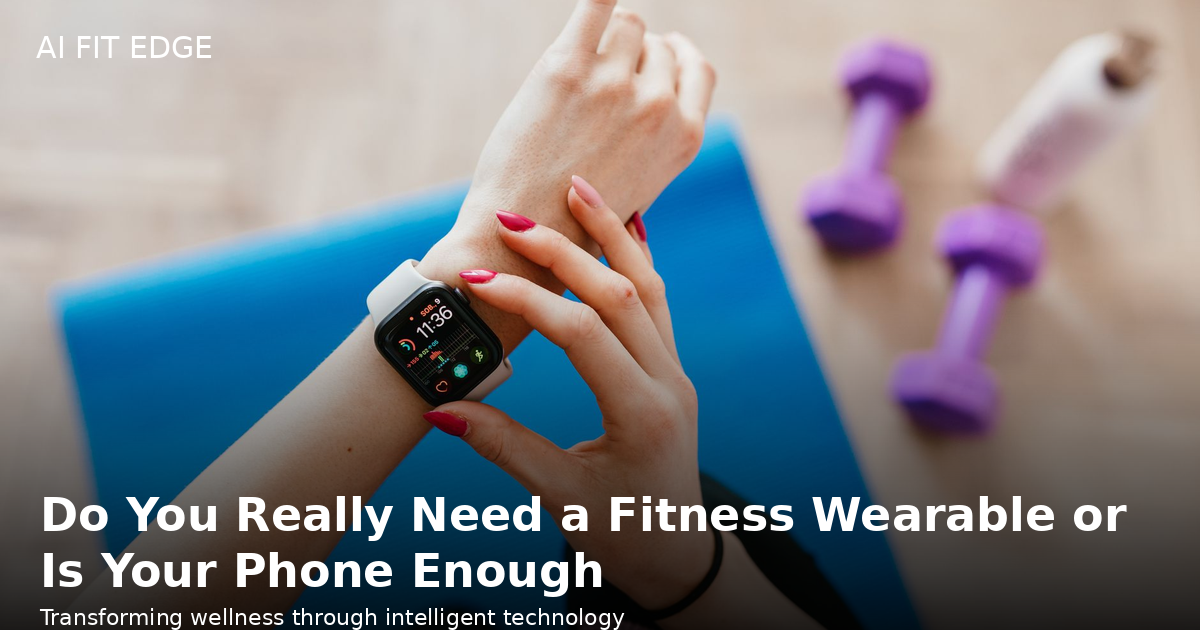
For the better part of a decade, tracking your training meant strapping something to your wrist. A wearable counted your steps, watched your sleep, and told you roughly how many calories you burned. That model still works, and millions of people rely on it every day. But a quieter shift has been building for the past few years. Your smartphone now runs algorithms that can watch you exercise, count your repetitions, judge the quality of your movement, and even estimate what you ate from a single photo.
That leaves a genuinely practical question that many lifters, runners, and beginners are asking: do I actually need to buy a fitness wearable, or is my phone enough? The honest answer is that it depends on what you train, what you want to measure, and how much you value passive, all day data. This guide walks through both options without a bias toward either, so you can spend your money with confidence and track what actually moves the needle for you.
What a Wearable Tracks Really Well
A wrist worn tracker shines in one area above everything else: continuous, background measurement that never asks anything of you. You put it on and forget it, and it quietly builds a picture of your whole day rather than just your workouts.
All Day Steps and Movement
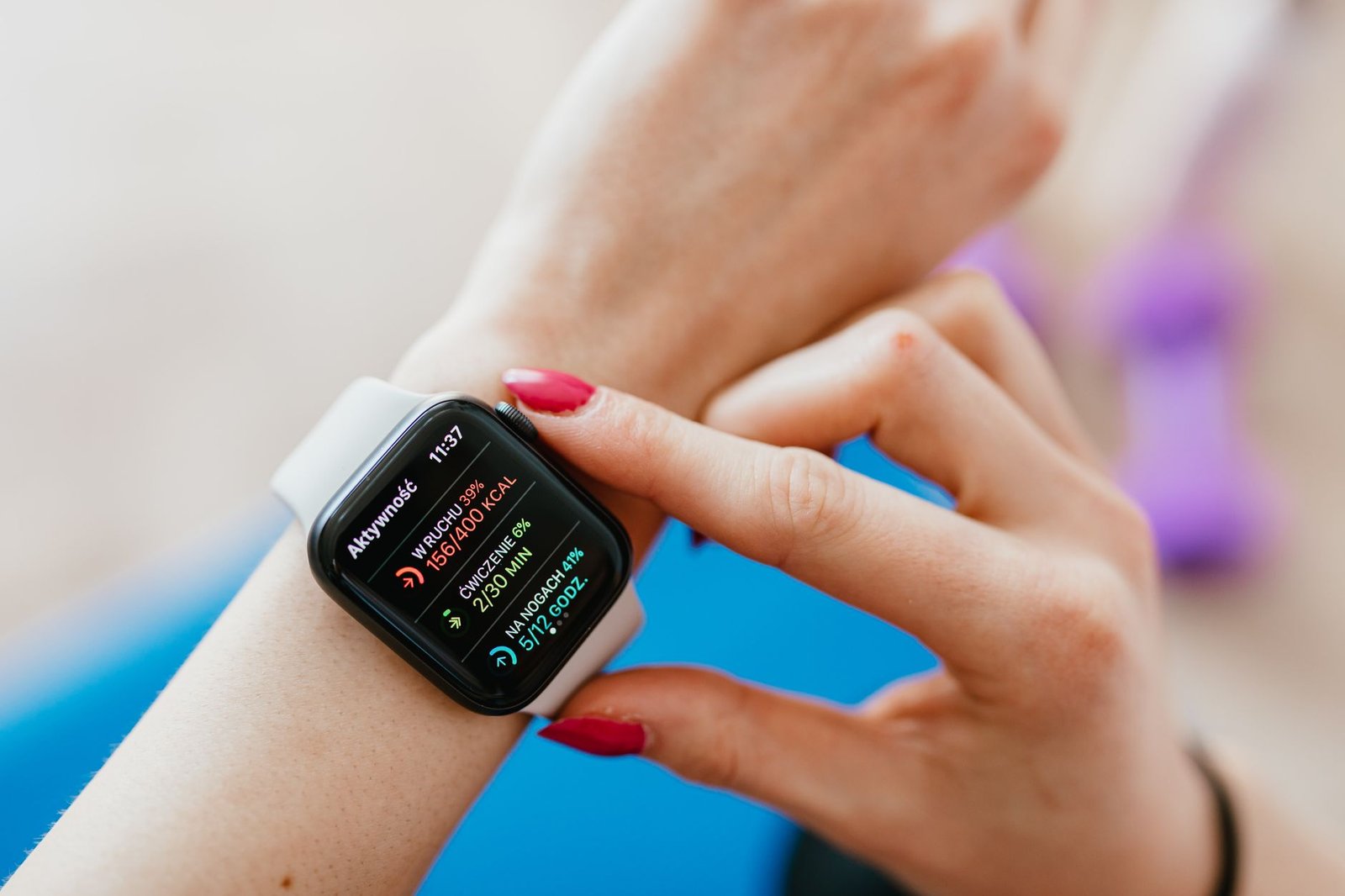
Step count is the classic wearable job, and most trackers are very good at it. If your goal is simply to move more, reduce the time you sit, or hit a daily movement target, a wearable is a reliable, low effort companion. Your phone does count steps too, but it only tends to register steps while it is on your body, which means you miss real movement during long meetings, chores, or any moment the phone sits on a desk.
Heart Rate Around the Clock
Continuous heart rate is where wearables genuinely outpace phones. Optical sensors on your wrist read your pulse many times per second and can spot your resting heart rate drifting up as you recover from a hard block or a poor night of sleep. That trend is genuinely useful early warning data. A phone cannot do this in the background because it is not touching your skin.
Sleep, Recovery, and GPS Cardio
For running and cycling, a wearable with a GPS antenna gives you clean pace, distance, and route data, and its heart rate feed lets you train in the right zone instead of guessing. Sleep tracking, while not medical grade, is accurate enough to show consistent patterns and to alert you when your recovery scores slump across several nights. If any of these matter to you, the case for a wearable is strong.
What Phone Based AI Tracking Handles Better
Modern phone apps are not trying to replace the step counter or the sleep tracker. They are aimed at a different problem: measuring the quality of what you do in the gym, which is exactly where wrist wearables are weakest.
Counting Repetitions That Actually Count
A wrist wearable uses motion to guess that you are working out, but it cannot tell whether a push up is full or shallow, or whether a squat went to depth. Phone based AI, using the camera and computer vision, can count each repetition and grade the size of your range of motion. For strength training, this is closer to what you would get from watching a coach than from glancing at a step counter.
Form Feedback You Cannot Get From a Wrist
This is the clearest advantage of the camera. A wearable cannot see your body position, so it cannot notice that your knees are caving in or that your lower back is rounding. An AI app pointed at you can flag when your form breaks down mid set and suggest you reset. Real time feedback like that is a coaching signal, not just a number, and it is the reason a growing number of home trainers train in front of their phone rather than beside their tracker.
Photo Based Nutrition Logging
Logging food has always been the part of tracking that people abandon first, because typing every meal is tedious. Several apps now let you photograph your plate and get an instant estimate of calories and macros. It is not as precise as weighing everything, but it is dramatically more consistent than skipping the log entirely after three days.
The Tradeoffs That Actually Matter
Both tools win on some fronts and lose on others. Being clear eyed about the tradeoffs prevents the disappointment of buying a device you seldom use, or expecting a phone to do something it simply cannot.
Cost
This is the most obvious gap. A capable wearable generally runs from about one hundred to three hundred dollars, and some premium services add a monthly fee on top. A phone based approach costs nothing beyond the phone you already own. If you are on a budget or you are not sure tracking will stick, starting free with your phone removes almost all of the risk.
Convenience and Passivity
Here the wearable flips the advantage back. You wear it all day and it records everything without effort. A phone based system usually needs you to set it up for each session, point the camera, and start the workout. For busy people who want zero friction on recovery days, that passive all day capture is a meaningful benefit.
Accuracy and Honesty About Limits
No consumer tool is perfect. Wearable calorie burn estimates are famously generous, so treat them as a rough guide rather than gospel. Phone based rep counting works best with a stable camera angle and good lighting, and it can stumble on very fast or very complicated movements. Neither tool replaces professional medical advice, and neither should make you obsess over a number that the manufacturer itself acknowledges is an estimate.
Privacy
Health data is intimate data, so it deserves a moment of consideration. A wearable uploads your sleep, heart rate, and activity to the manufacturer’s servers and syncs it to your accounts. A phone based app keeps more of the processing on the device depending on how it is engineered, but you should still read what each app collects and where it stores it. Choose tools whose privacy policy you understand and that give you control over what they share.
Match the Tool to Your Goal
The fastest way to decide is to start from what you are actually trying to improve, then pick the tool that measures that thing best.
Losing Weight
Long term weight loss comes mostly from consistent habits and a manageable calorie picture. Photo based food logging tends to win here because it removes the friction that kills food tracking after a week. A wearable helps more indirectly by gauging your daily activity level. For most people, the phone plus an honest food log is the higher leverage choice.
Building Muscle and Strength
Strength training lives and dies on progressive overload and proper technique. That is squarely the phone based AI zone, with rep counting and form feedback. A wearable will note that you had a workout today, but it will not tell you whether your next working set should go up by five pounds. If your priority is getting stronger, camera based tracking gives you far more of what you need.
Running, Cycling, and Cardio
This is the wearable’s home court. GPS, pace, distance, and heart rate zones are exactly what a runner wants, and phones are simply not strapped to your arm. If cardiovascular performance is your main sport, a good wearable is worth the money. You can still run with a phone in your pocket, but you will give up the continuous heart rate and reliable pacing.
Everyday Health and Building the Habit
If you just want to be healthier, move more, and sleep better, a wearable’s passive all day data is the most motivating option for most people. The simple act of seeing your step count and sleep score every morning builds momentum. A phone based app helps, but it only measures moments when you are actively engaged.
Use Both, or Decide With This Checklist
The smartest pattern for many people is to pair the strengths: use a wearable for all day steps, sleep, and cardio, and use a phone based AI app for the strength session and the meal photo. In that setup each tool does the job it does best, and very little is lost.
If you only want to pick one, answer these four questions honestly:
- Do I train mostly strength and want to count reps and fix form? Lean toward phone based AI tracking.
- Do I run, cycle, or want sleep and all day heart rate data? Lean toward a wearable.
- Is eating consistently my biggest struggle? Photo based food logging on my phone gives the fastest payoff.
- Do I want zero effort background tracking and do not mind the price? A wearable is the low friction choice.
If you still feel torn, start with what costs nothing. Use your phone for two weeks and track your sessions and meals honestly. If you hit your stride, you may never need a wearable. If you find yourself wishing for steps while you walk and heart rate while you run, upgrade with a clear sense of exactly which gap you are paying to close.
The Bottom Line
You do not need a fitness wearable to get in great shape, and you do not need a phone AI app either. You need a tracking method you will actually stick with, pointed at the metric that matters for your goal. A wearable remains the best companion for all day activity, sleep, and cardio. A phone based AI app has quietly become the stronger tool for strength form, rep accuracy, and painless nutrition logging. For most people the winning move is to match the tool to the goal, start free, and only buy a device when a specific gap in your current data becomes painful. The device is a tool, not the transformation. The transformation comes from training consistently and eating honestly, no matter which screen tallies the score.