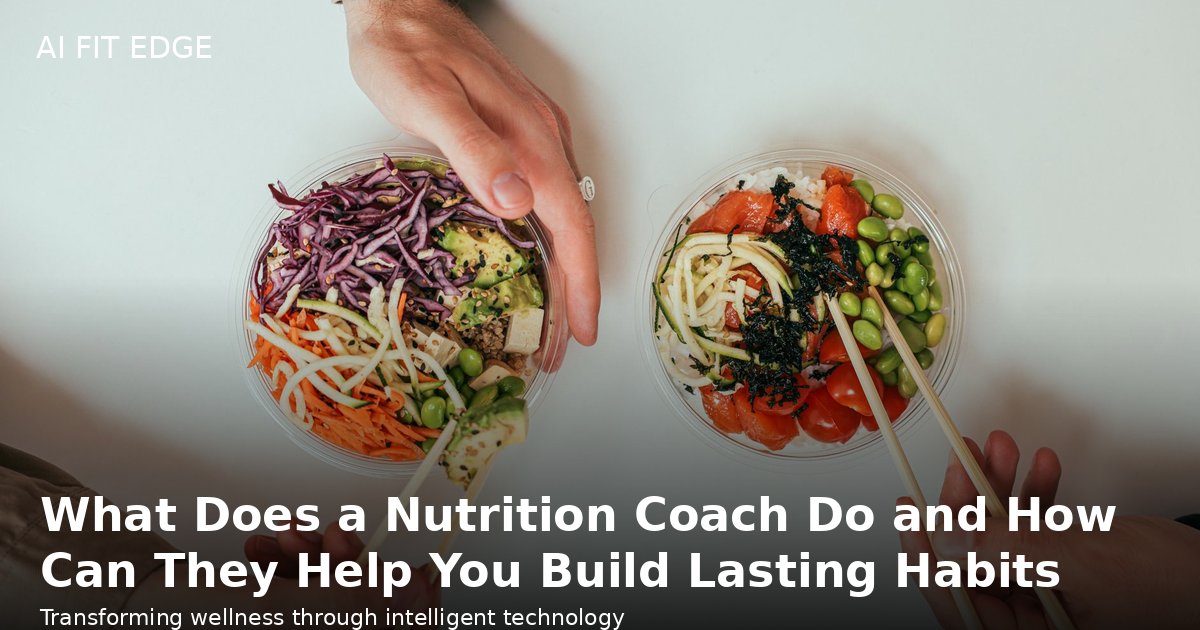
You have already tried the meal prep apps, the fasting window, the gym app that promises results, and the ten thousand step streak. Each one worked for a week or two before real life quietly got in the way. If that cycle sounds familiar, you may be wondering whether a human nutrition coach is the missing piece, and what such a coach would actually do for you day to day. A nutrition coach does not hand you a magic food list. Instead, a good coach helps you turn general nutrition knowledge into daily habits you can actually keep, which is a very different job than simply telling you what to eat.
This guide explains what a nutrition coach does, what falls outside their role, who benefits most, and how coaching compares to registered dietitians and the newer wave of AI driven nutrition tools. By the end you will know whether coaching is right for your goals, how to spot a quality coach, and how much of the process you can reasonably handle on your own.
What a Nutrition Coach Actually Does

A nutrition coach helps people improve their eating habits and the behaviors behind those habits to support goals like weight management, athletic performance, steady energy, or overall health. The emphasis on behavior is deliberate. Most people already know that vegetables are good and that soda is not a health drink. Knowing and doing are two completely different skills, and the coach works on the second one.
In practice a nutrition coach does several concrete things for you:
- Looks at your current eating patterns, meal timing, hunger and fullness signals, and your daily schedule to build a realistic starting point instead of a generic template.
- Helps you set specific, measurable, achievable, relevant, and time bound goals, then narrows them to one or two behaviors at a time so you are not overhauling everything at once.
- Teaches practical skills like reading a nutrition label, building a balanced plate, portion awareness, grocery shopping with a plan, meal prep that fits your week, and ordering sensibly at restaurants.
- Keeps you accountable through regular check ins where you can celebrate wins and troubleshoot slip ups without judgment.
- Helps you notice the difference between eating because you are hungry versus eating because you are stressed, bored, or tired, so you can make intentional choices instead of relying on willpower alone.
That last point matters more than people expect. Most diet failures are not caused by missing information. They are caused by emotional triggers, unrealistic expectations, and environments that quietly push you toward old habits. A coach helps you see those patterns and build systems around them, which is why results tend to last longer than a two week challenge.
Realistic Goals Instead of Perfect Diets
One of the first things a nutrition coach does is challenge the all or nothing thinking that drives most failed diets. When someone says they want to eat healthy, that goal is far too vague to act on. When someone decides to eliminate all processed foods and refined sugars overnight, that plan is usually destined to collapse by Thursday. A good coach helps you replace those sweeping intentions with small behaviors you can measure and repeat.
Realistic goals look more like these examples:
- Add a serving of vegetables to dinner five nights this week.
- Include a source of protein at breakfast every morning.
- Swap water for soda at lunch on three weekdays.
- Prepare lunch at home three days this week instead of eating out.
Notice what these goals have in common. They are behaviors that you control, not outcomes that depend on your body, your scale, or luck. A coach deliberately focuses on the controllable behaviors because outcomes like weight on a given day are influenced by sleep, hormones, water, and sodium in ways that have nothing to do with your effort. Tracking behaviors instead of only outcomes gives you reliable feedback and a much stronger sense of progress.
This approach also corrects the common mistake of trying to change too much at once. Lasting habit change rarely happens through a complete lifestyle reboot. It happens through stacking one small sustainable change on top of another over a period of months, with a coach keeping you pointed at the next small step so the process feels manageable.
Who Benefits Most From Working With a Coach
Almost anyone who wants to improve their eating can benefit from coaching, but the return is highest for people dealing with the gap between advice and action.
- Weight management clients. Whether the goal is weight loss, gain, or maintenance, a coach helps you build behaviors that support the result in the long run rather than chasing a number with short term diets.
- Athletes and active people. Recreational exercisers and competitors can get practical guidance on fueling before and after training, hitting protein and energy needs, hydration, recovery nutrition, and supporting performance without extreme restriction.
- Busy professionals. People with demanding schedules usually struggle with planning and consistency. A coach helps build realistic strategies for meal prep, healthy convenience options, eating well while traveling, and time efficient shopping.
- Older adults. Nutritional needs shift with age. Coaching can support muscle maintenance, bone health, energy, healthy weight, and functional independence through habits that fit an older lifestyle.
- Anyone tired of restrictive dieting. People who want better general nutrition without a rigid list of banned foods can learn to build balanced meals, increase fruit and vegetable intake, improve hydration, and create habits they can live with.
If you are in one of these groups and you already have decent nutrition knowledge but keep falling off track, that is a strong signal that coaching could help. The value is not the information. It is the accountability and the personalized adjustment that a static app cannot give you.
What a Nutrition Coach Does Not Do
It is just as important to understand the boundaries of nutrition coaching, because the role is sometimes confused with medical care. A nutrition coach is not a licensed medical professional, and quality coaches are honest about that line.
- They do not create personalized medical meal plans. Designing meal plans that account for diagnosed medical conditions and interpreting lab values generally falls within the scope of a registered dietitian or other licensed provider, depending on local laws. A coach provides education and behavior change support, not medical nutrition therapy.
- They do not diagnose, treat, or cure disease. Healthy eating is associated with lower risk of many chronic conditions, but no coach can ethically promise that a specific food, diet, or supplement will prevent or cure an illness.
- They should not push supplements. Recommending or selling supplements as a solution to your problems is a conflict of interest. A coach may offer general education about common supplements within their scope, but the goal is to teach you lifelong skills, not make you dependent on products.
- They must not misuse titles. You deserve to know exactly who is guiding your nutrition. A coach who calls themselves something they are not, implying clinical credentials, is a red flag.
This boundary is actually good news for you. It means a quality coach focuses on the part of nutrition that most people struggle with, which is behavior change, while directing you to the right professional if you have a medical condition that needs dietitian level care.
Nutrition Coach Versus Dietitian Versus AI Apps
The nutrition space now has three very different ways to get help, and understanding the difference will save you time and money. Coach, dietitian, and nutritionist are not the same profession, and neither is an AI app.
Registered dietitians provide medical nutrition therapy and nutrition care for disease prevention and management. They complete a relevant degree, supervised practice, a national exam, and ongoing education, and they can interpret lab values and manage clinical nutrition issues. If you have a diagnosed condition like diabetes, kidney disease, or a serious deficiency, a dietitian is the right point of entry.
Nutrition coaches focus on behavior change, healthy eating habits, and accountability. They are excellent for people who are generally healthy but keep struggling to apply what they know. The word nutritionist is complicated because its meaning varies by state and country. In some places anyone can use the title, while in others it is regulated, so it pays to check the rules in your area before assuming a nutritionist has specific credentials.
Then there are the AI nutrition tools and calorie tracking apps that have become extremely popular. These are brilliant at a few jobs. They can log your food in seconds, estimate calories and macros, spot patterns across your week, and give you reminders at helpful moments. Many people get real momentum from an app, especially for simple goals like hitting a daily protein target or staying aware of portion sizes. Apps are also cheap, private, and always available, which makes them ideal as a starting point.
However, apps have limits that a human coach fills. An app does not know why you order takeout when you are stressed, and it cannot adapt a plan to the fact that your work lunch is always catered. It cannot catch the pattern where you do great all day and then lose control at night. Most importantly, an app cannot build the relationship and accountability that keep people showing up over the long haul. For many people the ideal setup is to use an AI app for convenient logging and tracking while working with a human coach for the behavior change and motivation that technology cannot replicate.
How to Choose a Good Nutrition Coach
If the role sounds like a fit for you, the next question is how to pick someone who will actually help. Nutrition coaching is less regulated than dietetics, so a little homework goes a long way in separating quality from noise.
- Look for evidence based education. A quality coach or certification program covers macronutrients and micronutrients, healthy eating patterns, hydration, energy balance, weight management principles, and nutrition for exercise and recovery, all grounded in science rather than fads.
- Check the credential. Choose a coach who completed a reputable certification program with a clear scope of practice, an exam or assessment, and continuing education requirements, not just a certificate bought in an afternoon.
- Ask about their coaching method. A good coach focuses on collaboration, asking open questions, active listening, and motivational interviewing rather than lecturing you with a list of rules. If they do all the talking and just hand you a meal plan, you are getting a template, not coaching.
- Confirm what they will not do. A trustworthy coach clearly explains that they are not diagnosing or treating disease and that they will refer you to a dietitian or medical provider when appropriate. Overpromising results or pushing supplements is a warning sign.
- Look for empathy. The best coaches understand that years of dieting, guilt, frustration, or repeated failure can shape how you approach food. A coach who listens without judgment and meets you where you are will get better results than one who shames you into compliance.
Many respected organizations offer nutrition coaching certifications that meet these standards, and the best ones combine evidence based science with real coaching skills. A good program also teaches you how to recognize the boundaries of the role so you are safe as well as supported.
Practical First Steps Whether You Hire a Coach or Not
You do not need to wait for a coach to start improving your nutrition, and much of what coaching teaches is accessible to you today. Try a week of these practices and pay attention to what you notice.
- Write down everything you eat and how you feel before and after for a few days. The data itself often reveals patterns you never noticed.
- Pick one single behavior to work on, such as adding protein to breakfast or eating a vegetable at dinner, and do it for two weeks before adding anything else.
- Remove friction from the healthy choice, like chopping vegetables ahead of time or keeping a snack at your desk, and add friction to the unhealthy one.
- Pay attention to your hunger level before you eat and notice whether you are eating because you are hungry or because you are stressed, bored, or following a habit.
- Check in with yourself once a week and adjust one thing based on what you learned, rather than abandoning the whole plan after a rough day.
If you try these on your own and still find yourself stuck in the same loop, that is not a personal failure. It is the exact problem coaching is designed to solve. Pairing an AI tracking app with a human coach for accountability can be the difference between another abandoned resolution and a change that actually sticks.
A nutrition coach is not a shortcut and not a magic diet. A nutrition coach is a partner who helps you turn what you already know into habits you can live with, one small change at a time. The best outcome is not a perfect eating plan that lasts three weeks. It is a set of skills and habits that keep working long after the coaching relationship ends.