The fitness wearable world has spent the last few years racing toward bigger screens, brighter displays, and ever more features crammed onto your wrist. Google just went in the opposite direction. The Fitbit Air is a screenless tracker that hides on your wrist like a smart ring, focuses almost entirely on passive health monitoring, and leans on an AI coach that lives inside the Google Health app. It is one of the most talked about wearable releases of 2026, and for a very particular reason. This is not a watch trying to replace your phone. It is a quiet data collector designed to tell you how well you are recovering, sleeping, and adapting to your training, then turn that data into plain language through a conversational assistant.
If you have been wondering whether a screenless, AI powered tracker is the right move for your health and fitness goals, this review breaks down exactly what the Fitbit Air does, what it tracks, how the AI coach works, who it suits, and where it falls short. I have gathered the sensor details, battery behavior, subscription economics, and real reviewer experiences so you can decide with your eyes open. No hype, just the honest tradeoffs.
What Exactly Is the Google Fitbit Air?
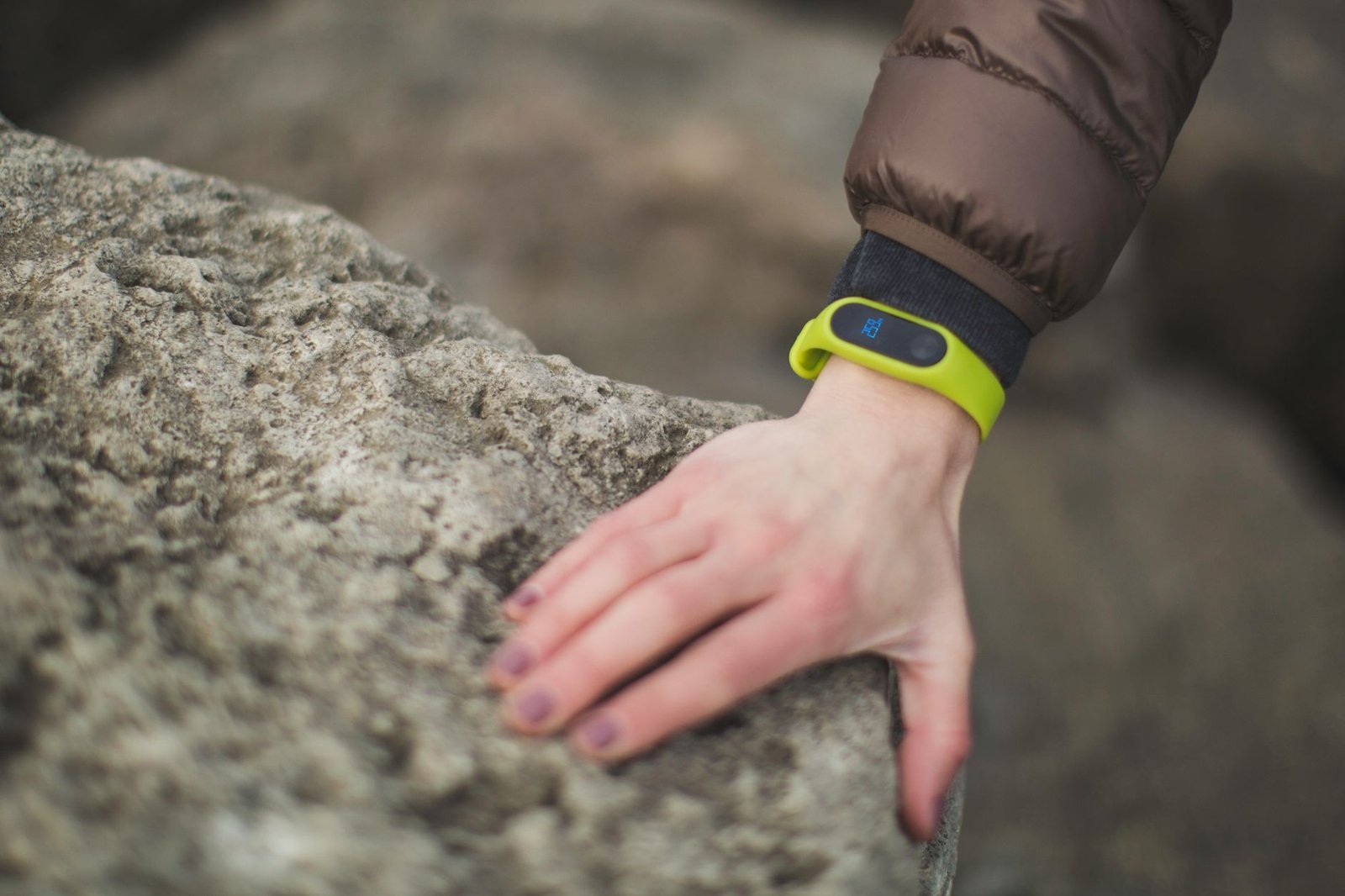
At its core, the Fitbit Air is Google’s entry level health tracker, and it marks a deliberate shift in how Google thinks about wearables. Instead of a watch face, there is no display at all. The device is a slim, rounded band that you fasten and forget, weighing only about five grams on its own and roughly twelve grams with the strap. That is extraordinarily light. Many people who review it say they stop noticing it within the first hour, which matters a great deal if you intend to wear a device through sleep and workouts without it nagging at you.
The form factor is the central idea. Google is betting that the people who most want continuous health data are not the same people who want another glowing screen on their arm. Removing the display cuts distractions, reduces battery drain, and lets the tracker be small enough to disappear. The design has drawn comparisons to smart rings and to the more expensive Whoop strap, both of which follow the same screenless philosophy. The Fitbit Air undercuts both on price, launching at around one hundred dollars, which is dramatically cheaper than either a premium smart ring or a subscription heavy recovery band.
The Sensor Suite Behind the Quiet Band
Do not let the small size fool you. The Fitbit Air packs a sensor suite that rivals trackers costing several times more, and the whole approach is optimized for always on monitoring rather than on demand checks. It uses an optical heart rate sensor to measure your pulse around the clock, and it also captures heart rate variability, which is the subtle variation in time between heartbeats that many athletes use as a proxy for recovery and stress.
On top of heart data, the band includes red and infrared sensors for blood oxygen saturation, commonly called SpO2 levels, plus a skin temperature sensor and a measure of breathing rate. There is also an accelerometer and gyroscope for detecting movement, steps, and sleep phases, along with a vibration motor for silent alerts. In practical terms this means the device quietly builds a rich picture of your biology every single day without you doing anything. You simply wear it. It stores heart rate data at very fine intervals and, when it cannot reach the Google Health app, it keeps daily totals for the last thirty days so nothing important is lost while you are offline.
Because the device monitors continuously, it can connect several signals together. For example, your sleep stage data, overnight resting heart rate, skin temperature, and oxygen variation can combine into a readiness or recovery style score that tells you whether your body is primed for a hard session or in need of rest. This is the same kind of daily readiness signal that powerhouses like Whoop and Oura popularized, now packaged at a much friendlier price.
The AI Coach Is the Real Selling Point
The headline feature of the Fitbit Air is not a sensor at all. It is an AI coach, built on the Gemini model, that lives inside the Google Health app. Think of it not as a dashboard full of charts but as a conversational assistant that knows your real health data and talks back to you.
You can ask the coach questions about your sleep, your workouts, your recovery, and your overall wellbeing, and it answers using your own personal data rather than generic advice. If you tell it you are focused on getting stronger and lowering your resting heart rate, it can generate a weekly plan with a sensible number of sessions tailored to that goal. It produces personalized sleep summaries every morning, flags trends in your metrics, and offers proactive insights when it notices something worth your attention. The coach is aware of weather trends that might affect your runs and can factor in medications if you choose to tell it about them. This moves the experience from passively showing you numbers to actively coaching you through decisions, which is precisely the shift a lot of people want from a health wearable.
That said, there is a clear line between what is free and what is not. The core tracking features that any fitness fan needs come free, including heart rate, sleep tracking and score, readiness, SpO2 and skin temperature monitoring, and AFib detection where it is supported in your region. The AI coach itself, along with personalized weekly fitness plans, deeper sleep coaching, and advanced cardio load analysis, sits behind a subscription called Google Health Premium. The Fitbit Air includes the first three months free, after which the service typically costs around ten dollars per month or roughly one hundred dollars for a full year. For some users this is the single most important consideration, because the AI coach is the feature that makes the band feel special, and it is a recurring cost rather than a one time purchase.
Sleep, Recovery, and Readiness in Real Life
For the recovery and sleep focused crowd, the Fitbit Air delivers some genuinely practical value. Sleep tracking is one of the strongest features, backed by an updated machine learning model that Google says improves sleep stage accuracy compared to its previous generation of trackers. Because there is no screen to glance at before bed, the device is easy to wear through the night, and reviewers consistently report it is comfortable enough to forget completely while sleeping.
You wake to a sleep score and a summary that breaks down your night into stages, and the AI coach turns that into guidance you can act on rather than raw numbers you have to interpret yourself. If your score is low one morning, the assistant might suggest adjusting your bedtime or recovering before a hard session. If your resting heart rate trends up over several nights, it can flag that pattern as a possible signal that your training load is too high or that stress is climbing.
The silent alarm is another quiet win. Because the band vibrates on your wrist instead of blaring a sound, you can wake up when you want to without disturbing a partner, which is a small convenience that people who share a bed genuinely appreciate. This is a device that seems designed for people who care less about live workout metrics and more about the bigger question of how well their body is recovering from day to day.
What the Fitbit Air Does Not Do
Honesty matters here, because the screenless design creates real tradeoffs that will be deal breakers for certain users. There is no display, which means you cannot glance at your wrist for a step count, a workout timer, or a live heart rate readout mid session. There is also no built in GPS, so location based workout data relies on the GPS in your phone rather than the band itself. If you love training with a watch showing you everything in real time, the Fitbit Air is probably not the right tool.
Reviewers also point out that live feedback during workouts is limited and that this is not a device for serious structured training analysis. The app has been praised for its health insights but criticized for needing polish, and the fitness crowd notes there is sometimes a gap in clear access to the underlying raw data. Early on, some features were missing at launch and Google responded by pushing updates to restore them and to act on early feedback, which is a positive sign but also a reminder that this is a first generation product with room to grow.
There is also the subscription question. If you buy the band but never pay for Google Health Premium, you still get strong core tracking, but you lose access to the AI coach and advanced personalized guidance. For many people the coach is the entire reason to buy a Fitbit Air, so the total cost of ownership over a year or two includes that recurring fee. You need to go in knowing that.
Who Should Buy the Google Fitbit Air
Putting it all together, the Fitbit Air is not a product for everyone, but it is an excellent fit for a fairly large group of people. Let me lay out the honest breakdown.
Buy it if you want a recovery and sleep coach on a budget
- You want the daily readiness and recovery signals of a premium band without paying Whoop level subscription fees.
- You care most about sleep quality, resting heart rate, HRV, and how your body is recovering, not live workout stats.
- You find screens distracting and prefer a tracker that disappears on your wrist and away from notifications.
- You are comfortable managing a moderate monthly subscription for the AI coaching to unlock the full experience.
Skip it if you need live workout feedback
- You want to see heart rate, pace, and reps in real time during a session.
- You train without your phone and rely on the wearable for GPS based route tracking.
- You prefer granular raw data exports and deep control over your metrics over conversational summaries.
- You want a single purchase with no recurring subscription attached to the core value.
In short, the ideal Fitbit Air owner is someone who mostly wants to understand their recovery, sleep, and daily readiness, and who appreciates having an AI assistant translate that data into simple advice. If that describes you, the Air is arguably the most accessible way into that world in 2026. If you live for live training metrics on a screen, you will probably be happier with a full fitness watch.
Final Verdict
The Google Fitbit Air is a confident statement that wearable health has moved beyond screens. At around one hundred dollars for the hardware, it undercuts nearly every serious competitor in the recovery and readiness space, and it delivers a sophisticated sensor suite that would have been unthinkable in such a small, light band just a few years ago. The Gemini powered AI coach is the standout feature, turning your personal health data into genuinely helpful, personalized guidance on sleep, fitness, and recovery.
The tradeoffs are real and easy to underestimate. No screen, no on board GPS, limited live workout feedback, and a subscription wall in front of the best AI features all mean this band is not for everyone. But for the recovery focused, sleep obsessed, and device weary crowd, it is a near perfect fit. If your goal is to finally understand why you feel tired some days and energized on others, and you want a coach that learns your body and talks back, the Fitbit Air deserves a serious look in 2026.