Why Group Fitness Started Doing the Personal Thing

Walk into any busy class and you will see the exact same tension. Thirty people are doing the same movement pattern at once, yet every one of them arrived with a different goal, a different body, a different amount of sleep last night, and a different energy level today. Group fitness grew fast because it is motivating and social, but it was never truly personal. That is starting to change in a big way.
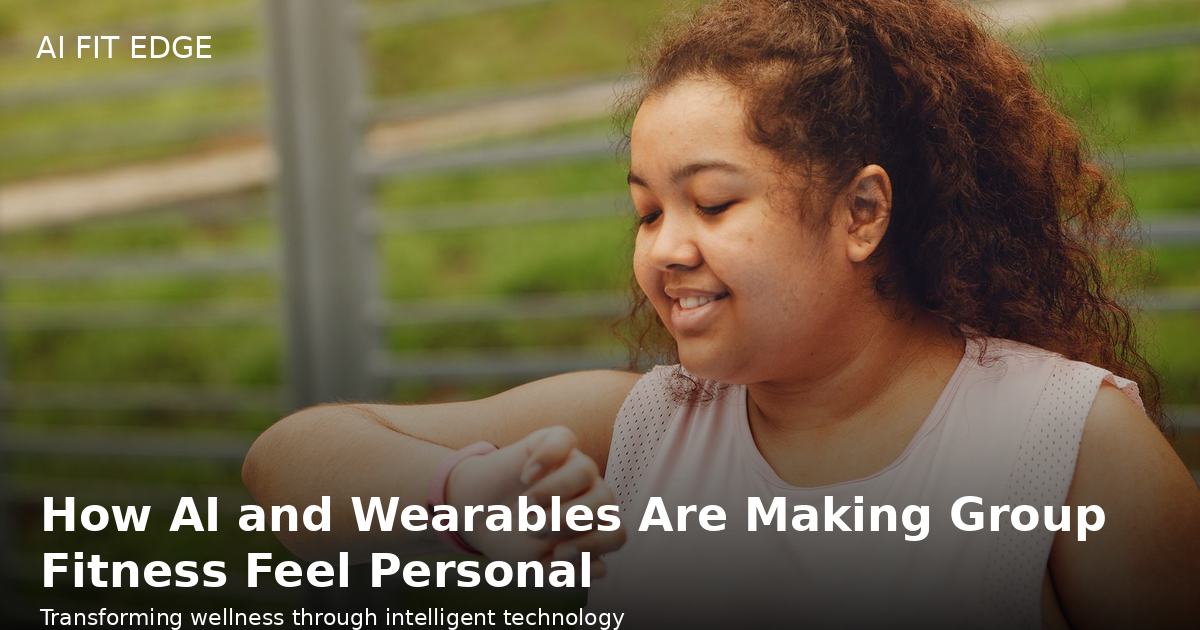
A major boot camp franchise just turned its gym app into a full personal training companion. Members can now connect their smartwatch or fitness ring, log what they eat, watch their hydration and protein numbers, and track progress toward their own personal records right inside the same app they use to book class. Behind the scenes an AI engine reads all of that data to give each person a plan that is genuinely theirs instead of a copy of the person next to them.
This article breaks down what that shift really means for you as a gym goer, how the AI and wearable technology works, why personalized training tends to get better results, the mistakes people make with these tools, and how to get more out of whatever platform your gym adopts.
What a Personalized Fitness Platform Actually Does
Before you dismiss this as another app update, look at the actual feature set. The platform, called a personal plan hub, folds into the gym brand’s existing membership app. Once you connect your device, it becomes a single place where several streams of health data come together and finally talk to each other.
The core features you can expect from this generation of training apps include the following.
- Wearable connection for Apple Watch, Garmin, Oura, and Google devices, plus the option to track manually if you do not own a wearable.
- Nutrition guidance built around calorie intake, hydration, and protein consumption rather than a generic calorie counting screen.
- In class PR tracking so you can see whether your strength, endurance, or speed is actually improving over time.
- Progress views that let both you and your coach see how the whole month is trending instead of judging one workout in isolation.
- One on one coach guidance that now sits on top of live member data instead of relying on memory and guesswork.
The key detail is that the coaching conversation changed. Coaches have always talked to members about training and food, but those chats depended on what a person remembered to share. Now the coach can see real trends across days and weeks, which means the advice you get is grounded in your actual behavior rather than a rough estimate from the last time you spoke.
The AI and Machine Learning Engine Behind the Scenes
The word AI gets thrown around a lot in fitness, so it is worth being specific about where machine learning and large language models actually add value here. This is not a chatbot reading a script. The system ingests your wearable streams, your nutrition log, and your class performance, then looks for patterns across all of it to shape recommendations.
If your sleep quality drops while your training volume stays high, the engine can flag that you might be skirting the edge of overtraining and suggest a recovery day. If your hydration has been low on the days you train hardest, it can nudge you to drink more before class. If your protein is consistently under target, it can adjust your meal guidance so your body has the building blocks it needs to repair muscle.
That kind of signal detection is where the technology earns its keep. A single number from one day tells you almost nothing. Machine learning is useful precisely because it can hold dozens of variables at once and notice a connection that would take a human weeks of note taking to see.
The company that launched the platform has also been open about how it intends to use the collective data. The plan is to let insights from tens of thousands of members guide business decisions, like whether to focus a studio more on strength work or to adjust class schedules around when members actually show up. That is a notable step because it moves fitness data from a personal dashboard to a way of shaping the gym experience itself.
More AI features are coming in the next year, including what the brand calls AI coaching components. The stated intention is to keep the AI intentional, which is a meaningful principle. The best fitness AI does not replace the coach in the room. It makes that coach more informed and gives members better continuity between sessions.
Why Personalized Training Sticks and What the Research Shows
There is a reason nearly every serious gym operator is pouring money into personalization. It works better at keeping people consistent, and consistency is the real engine of fitness progress.
Several forces explain why personalization improves adherence.
- Relevance. When the plan reflects your goal, your schedule, and your current level, it feels worth following. A generic program can feel like homework that has nothing to do with you.
- Feedback loops. Seeing your own trends rise week over week is motivating in a way that a poster of someone else’s results never is.
- Accountability. Knowing a coach and an AI system are watching your long term patterns makes it much harder to quietly abandon a plan.
- Adaptation. Personalized plans adjust when life happens, so one bad week does not derail the whole month.
- Measurable progress. Tracking personal records gives you concrete proof that the work is paying off, which keeps you coming back for more.
There is also an honest physical story behind the personalization trend. Bodies respond to stress, recover from it, and adapt over time at very different rates. Two people doing the same workout can get meaningfully different results because of sleep quality, stress, nutrition, and training history. A platform that knows those variables can calibrate intensity and recovery in a way a one size fits all class plan cannot.
The idea that tailored exercise beats generic prescriptions has strong support in exercise science. Programs based on an individual’s baseline fitness level and goals consistently produce better adherence and outcomes than assigning everyone the same workload.
Three findings tend to come up again and again in the literature.
- People stick with exercise that is set at the right difficulty for them. Too easy becomes boring and too hard becomes discouraging, but a level that gently challenges you becomes sustainable.
- Monitoring progress and adjusting as you improve produces longer lasting results than holding a fixed plan for weeks on end.
- Recovery is individualized. Markers like sleep and resting heart rate vary from person to person, and training plans that respect those differences reduce the risk of burnout and injury.
That last point matters for this new generation of tools. It is not just about pushing you harder. A good personalized system should also know when to pull back. The wearables that feed these platforms are especially good at tracking recovery signals like heart rate variability and sleep quality, which are exactly the inputs smart training decisions need.
Common Mistakes People Make With Fitness Technology
Having the data and using it well are two different things. Most people make predictable errors when they first connect their wearable to a training app. Knowing these pitfalls up front will save you weeks of frustration.
- Chasing daily numbers instead of trends. A low step count on one day means nothing. Judge your direction over one to two weeks, not a single glaring number.
- Trusting a wearable’s calories as gospel. Device estimates of energy spent are rough approximations, not laboratory measurements. Use them as a general guide, never as a precise accounting of what to eat.
- Overloading on new habits at once. Do not remeasure your food, learn a new app, and double your training volume in the same week. Introduce one change at a time.
- Ignoring sleep and recovery. Many people use the training tools but never act on the recovery data, which is the most powerful signal these devices offer.
- Letting the app replace the coach entirely. The best setup uses the technology to make your weekly coach conversation richer, not to eliminate human guidance.
- Forgiving inaccurate inputs. If you log meals loosely or wear your device loosely, the recommendations that come out will be equally rough. Garbage in produces garbage out.
These mistakes are common because the tools are new to most people. A little intentionality about how you wear, log, and interpret your data makes an enormous difference to the quality of the guidance you receive.
How to Get the Most From Your Gym’s AI Training Platform
Whether you train at a big boot camp, a boutique studio, or a large chain that is rolling out similar features, the same set of habits will help you turn raw data into actual results. Here is a practical starter routine.
- Wear your device consistently, including at night, so the app builds a trustworthy baseline for sleep, heart rate, and recovery.
- Log your food honestly for at least one to two weeks so the nutrition engine can see your real patterns instead of a polished version of them.
- Set one clear goal, like adding a certain amount of weight to your squat or hitting a protein target, and keep that goal in the app.
- Check the trend view weekly rather than the daily dashboard, and look for direction over detail.
- Bring a specific question to your next coach session, such as whether your recovery score supports pushing harder this week or backing off.
- Revisit your plan after four to six weeks to adjust something, since a static plan is a sign the personalization loop is not working.
The people who get the most from these platforms treat them the way a serious athlete treats a training log. The tool is only as good as the data you feed it and the decisions you make from it.
The Honest Caveats and What It Means for Your Training
For all the promise, it is worth holding this new wave of technology to a reasonable standard. The following caveats apply to almost every AI powered fitness platform on the market today.
- Consumer wearables differ in accuracy. High end rings and watches track most signals well, but no wrist device measures everything the way a medical device would. Take absolute numbers with a grain of salt.
- AI recommendations are probabilistic, not certain. The engine is very good at spotting patterns and very bad at knowing your body’s unique quirks. Use its advice as input, not as final word.
- Nutrition guidance from an app is not medical nutrition therapy. If you manage a health condition, keep your care team in the loop before making significant dietary changes.
- Data privacy demands attention. Read what the app collects, what it shares, and how it is secured. Your health data is sensitive and deserves the same care you give your financial information.
- No app replaces a qualified human coach for form, motivation, and judgment. The technology amplifies coaching, it does not substitute for it.
None of these caveats should stop you from trying the tools. They simply describe how to use them intelligently, with expectations that match what the technology actually delivers.
The takeaway is straightforward. Personalized training used to be a premium service that only private coaching could deliver. By folding AI and wearable integration into the standard member app, large group fitness brands are making genuinely personal coaching available to every member who wants it.
For you as a trainee, that is worth a deliberate response. Connect your device, log honestly, set a single meaningful goal, watch your trends over weeks rather than days, and use the data to make your time with a coach sharper. When you do those things, the same app that books your class becomes the tool that pushes you closer to your best shape.
The technology is not magic and it will not train for you. What it removes is guesswork. That alone is a real upgrade for anyone who has ever walked into a group class and wondered whether the plan in the room was actually the plan for them.