A Funding Rebound That Shifts the Whole Game

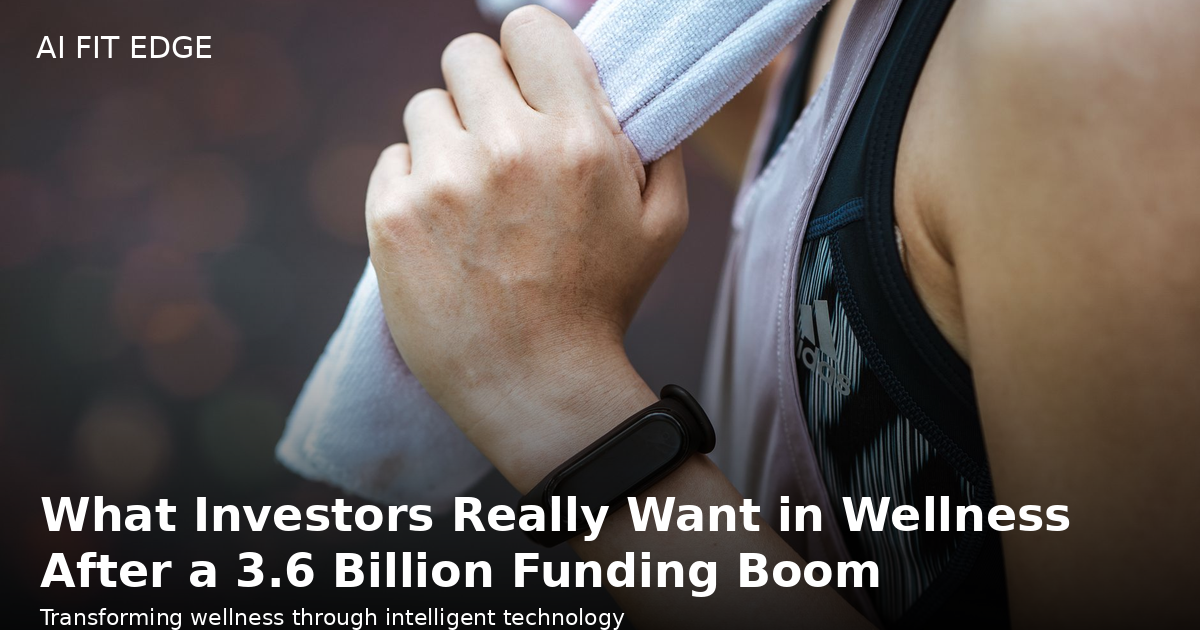
The wellness industry just showed investors that it is worth their attention again, and the shift is significant. A fresh wave of venture money flowing into fitness and health startups marks a clear turn away from the cautious years that followed the early pandemic boom. Nearly three and a half billion dollars has moved into wellness companies recently, and the way that money is being spent tells you a great deal about where the sector is headed over the next several years.
For anyone running a fitness business, an app, a wearable brand, or a content site in the health space, this is more than a headline. It is a signal about what the market values, what investors will pay for, and which ideas are likely to attract the next round of financing. Understanding the direction of that money helps you position your own product, studio, or content to ride the same wave instead of missing it.
There is a practical reason to pay attention to funding patterns even if you are not raising money yourself. Investors spend their time studying which problems are big enough to build companies around, and that research is a reliable map of where consumer demand is heading. When capital concentrates around a particular type of wellness product, it is usually because early data shows real people staying engaged with it.
Hardware Alone Is No Longer Enough
The clearest lesson from the funding pattern is that a device on its own is no longer a complete business. Investors have seen too many clever gadgets gather dust in a drawer after the first few weeks of excitement. What they want now is a device that connects to a service, a software layer, and a genuine habit loop that keeps a person coming back day after day, month after month.
Think about what separates a durable wellness product from a passing novelty. The successful ones do not just measure something. They turn that measurement into a clear next action, a conversation with a coach, or a visible improvement in how you feel. The hardware becomes the entry point, but the value lives in the ongoing relationship between the user and the system that interprets their data and responds to it.
This is why subscription revenue has become so important in the wearable world. A company that only sells a device once is betting everything on that single moment of purchase. A company that pairs a device with coaching, analysis, and a feedback loop is building a recurring relationship, and that recurring relationship is what investors are paying a premium for.
The Glucose Sweet Spot
One category drawing especially enthusiastic attention is continuous glucose monitoring for healthy people, not just for people managing diabetes. The appeal is easy to understand. Glucose is a real time signal that changes with what you eat, how you sleep, and how you train, and it gives people immediate feedback that is far more tangible than a step count or a calorie estimate.
When you eat a meal, your blood sugar rises, and the size of that rise influences your energy, your cravings, and even your focus a few hours later. A sensor that shows this in real time turns an abstract concept like metabolic health into something you can watch change moment to moment. People who try it often report that it changes how they eat faster than any class or lecture ever could.
Investors are betting that making this signal accessible, affordable, and actionable will open up an enormous market of healthy consumers who want to fine tune their energy and their metabolic health. The technology already exists. What innovators are racing to build is the software that turns the numbers into advice you can actually use at the dinner table or before a workout.
Going Analog in a Digital World
There is also a quieter counter trend worth noticing. While most of the industry races toward more sensors and more data, some of the most interesting products are deliberately going simpler. Analog tools, frictionless routines, and interventions that do not require an app on your phone are attracting attention precisely because they fight the fatigue of constant digital tracking.
This is not a rejection of technology. It is a recognition that behavior change is fragile and that adding friction to your day rarely makes you healthier. Products that fold wellness into your existing routine, that feel effortless, and that do not demand constant attention often outlast the more impressive sounding gadgets. Investors are beginning to reward that realism, and it is a reminder that the best health tool is the one you actually keep using.
How Everyday Exercisers Benefit From These Shifts
All of this matters for you even if you never sit in a pitch meeting. The competition for your attention and your subscription is driving companies to make genuinely better products. A wearable that used to just count steps now learns your sleep patterns and tells you when to push and when to rest. A food log that used to be a chore now recognizes a photo of your dinner in a second.
The practical upside is that you have more choices than ever, and those choices are increasingly built around the outcome you actually want rather than raw data collection. When you buy a device or subscribe to a service, you can now ask a sharper question: does this turn my effort into better sleep, steadier energy, or a stronger body, or does it just give me more numbers to worry about?
Common Mistakes When Choosing Wellness Tech
With so much choice, it is easy to fall into a few familiar traps. The first is buying for the promise of the product instead of for the daily habit it supports. A scale that measures twenty metrics will not help you if you never step on it, while a simple note in your phone that you actually write each day might change your whole trajectory.
The second mistake is valuing impressive features over consistent comfort. A device you love wearing outranks a device with a longer spec sheet. The third is ignoring the subscription cost of a connected device, since that monthly fee is often the real price of the ongoing coaching and analysis that makes the hardware useful.
Where the Next Wave of Money Goes
Looking ahead, the funding is likely to concentrate in a few familiar places. Artificial intelligence that personalizes coaching, connected devices that reduce rather than add burden, longevity science that promises healthier years rather than just more of them, and services that make proven interventions cheaper will all compete for attention in the coming cycles.
Expect to see more investment in predictive coaching that learns what works for you personally, stricter attention on sleep and recovery as first class signals, and a growing interest in products that keep healthy people healthy instead of only treating them once something goes wrong. The companies that win will be the ones that make their guidance feel effortless and personal.
Reading a Funding Signal Without Getting Distracted
It is worth remembering that funding is not proof that every idea will succeed. Many well funded products still disappear, and many lean startups quietly grow into something large. What the patterns tell you is which direction the industry is exploring, not which company will win.
The best approach is to use funding news as a compass, not a verdict. When you see concentration of money around glucose tracking, sleep rings, or AI coaching, treat it as a sign that those categories are worth paying attention to and that better products are on the way. That is a much more useful frame than chasing whatever is momentarily fashionable.
The Lesson for Founders and Creators
If you are building in this space, the funding pattern points to a clear strategy. Lead with the outcome your user feels, not the spec of your sensor. Build a habit loop before you build a fancier device. Make your product feel effortless, and design it to fit inside a person’s real day rather than demanding to become the center of it.
The companies that win the next cycle will not be the ones with the most impressive press release. They will be the ones that turn a small, repeated, genuinely useful action into a result people can feel. That is the lesson the latest wave of venture money is teaching, and it is a good one to learn early.
Whether you are an investor, a founder, a coach, or simply someone trying to get healthier, the same principle applies. Focus on the daily practice, measure what matters, and choose tools that quietly serve that practice instead of competing for your attention with noise.